 By Dallas Kali
Australian sun is fierce, and the right cover makes an outdoor space usable through the hottest part of the day. Before you buy, you need to decide on a shape. The design of your shade structure affects how much sun it blocks, how it handles wind and rain, and how it looks over your yard.
Three designs dominate: cantilever, hypar, and flat. Each shade structure suits different sites, budgets, and needs. A flat sail keeps things simple, a hypar adds strength and style, and a cantilever frees up the ground below.
Getting the choice right means matching the design to your space. Think about your fixing points, the direction of the sun, and how you plan to use the area under the shade structure. Here is how the three options compare.
Flat Shade Design
A flat sail runs level or on a gentle single slope. It is the simplest option and often the cheapest. You fix all corners at a similar height, which makes it quick to plan and install.
Flat designs suit small, square, or rectangular areas such as a patio or a play zone. The catch is drainage. Water can pool on a truly flat sail, so build in a slight slope to let rain run off. Flat sails also flap more in strong wind if you do not tension them well.
Best for: small budgets, simple square areas, low-fuss installs.
Hypar Shade Design
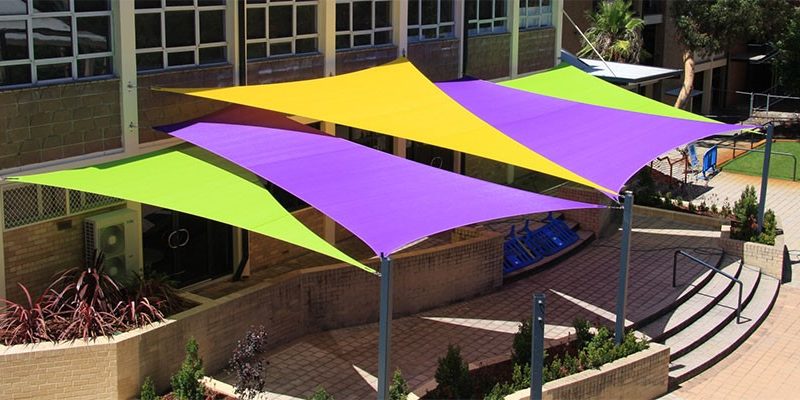
Hypar stands for hyperbolic paraboloid. In plain terms, you fix two corners high and two corners low, giving the fabric a twisted, wave-like shape. This twist adds real strength.
The design tensions the fabric in opposing directions, so it stays tight and copes well with wind. It also sheds water and looks striking over a deck or pool. Hypar sails handle larger spans better than flat ones, which makes them a solid pick for exposed sites.
Best for: windy spots, larger areas, a bold look with strong performance.
Cantilever Shade Design
A cantilever design supports the shade from one side only, using a single post or arm. This leaves the area beneath clear of posts, which matters for carports, spa areas, and tight courtyards.
The trade-off is engineering. A cantilever puts heavy load on one anchor point, so it needs solid footings and a strong frame. Costs run higher, and you often need a professional install. Done right, it gives clean, open shade with no poles in the way.
Best for: open ground, carports, spaces where posts get in the way.
Quick Comparison
- Flat: cheapest, simplest, watch for pooling water.
- Hypar: strong in wind, sheds water, larger spans.
- Cantilever: clear space below, higher cost, needs strong footings.
Match the design to your site and how you use the space. Pick flat for a small, simple area, hypar for wind and larger spans, and cantilever when you need clear ground below. Check your fixing points, note where the sun falls, then choose the design that fits.